A Motivational Transition

“Our meetings mean a lot to me because sometimes I feel bad or sad and I know I can tell you and you’re going to hear me and not judge me”. –17-year-old student
Acknowledge Alliance is proud to share Ricardo’s success story, as told by one of our Transition Program Therapists.
Ricardo was referred by Sequoia High School District to get support through our Transition Program after transferring from an expulsion school to District High School. In this program, we offer weekly therapy sessions for students transferring or returning to comprehensive high schools from the smaller settings of the County Court and Community Schools, expulsion schools and Juvenile Hall.
This was Ricardo’s second year attending school in the United States after emigrating from Mexico two years ago. His family made the decision to send him to live with his family in the US because he was deeply involved in a gang in Mexico, which meant that his life was in imminent danger.
From our first session, it was clear that Ricardo was overwhelmed. He struggled to adjust to the new school’s academic expectations, student volume, and social and economic diversity. His relationship with his mother was unstable as well, and he was greatly missing his maternal grandmother, with whom he grew up.
Ricardo and I met weekly, sometimes twice weekly, during school days. He showed up to every meeting with no exception, sometimes asking to meet again, during more strenuous times. He became comfortable expressing his emotions, whether it was sadness, joy, or anger. When he tried to make sense of certain situations and/or relationships, he often referred to previous conversations we had.
Through our sessions, Ricardo learned to understand and value the perspective and maturity he gained through his life experiences and tragedies. He developed a better sense of who he is, what his needs are and where he can get those needs met – allowing him to manage himself better within and outside his relationships. “I can control my reaction to my mom better, because of therapy.”
By the end of the year, Ricardo felt that he had adjusted to school and became strongly motivated to succeed: “When I started going to school, I just wanted to waste my time, but now I want to graduate and go to college.”

2016-2017 Evaluation Highlights
We are pleased to share highlights of the comprehensive evaluation of our programs during the 2016-2017 school year.
Resilience Consultation Program
• 94% of educators working with Acknowledge staff reported an increased awareness of student social and emotional issues.
• 93% of educators reported using at least one strength-based strategy - such as talking supportively to students who are struggling, communicating high expectations to students and focusing on positive things students do rather than negative things - at least monthly to engage and reach their students.
• 90% of educators reported an increase in positive educator/student relationships.
• When asked which Social Emotional Learning topics were most useful, the top two categories that students reported were friendship and mindfulness, followed by problem solving and character strengths.

"I am already empathetic and understanding of the lives of the students, but it is very easy to fall into a negative mindset about why students are behaving in certain ways and why they aren't doing what we are expecting. Making a conscious effort to view our students through an empathetic and understanding lens has made a huge difference to my teaching."
— Teacher
Collaborative Counseling Program
• 95% of Court and Community School students reported that their counselor listened to them without judgment and was someone they could trust.
• 93% of Transition students reported that counseling helped them to express their emotions constructively.
• 93% of Transition students were enrolled in school and working towards high school graduation.
• 100% of therapist interns we trained reported an increased understanding of the high-risk, multi-cultural adolescent population they worked with.
“Counseling was very helpful to me because it helped me express my feelings and thoughts with someone who actually listened to me and had good things to say about them. Also it was really helpful because I received tips and advice that helped me a lot throughout the whole time I’ve been here.” — High school student
Suicide Prevention Awareness
Suicide is the second leading cause of death in the United States for persons aged 10-24.
In 2009, our Social Emotional Learning lessons were piloted as a response to the youth suicide clusters in Palo Alto. Concerned teachers and parents wanted to know what could be done in elementary school to strengthen student resilience, so that youth can better navigate their teen years. In the past 2 years, we’ve been offering teacher resilience groups at the high school level too.

Recently, Acknowledge Alliance was a key contributor to the K-12 Toolkit for Mental Health Promotion and Suicide Prevention, which is being promoted across the state. The State of California enacted into law the “Pupil Suicide Prevention Policies” requirement, AB2246. All California Local Education Agencies (LEAs) must have this policy in place by the beginning of the 2017-2018 school year. The Toolkit is included in the Model Policy as a resource for implementing this policy. The Toolkit contains information about what schools can do to promote youth mental wellness before mental health concerns arise, how to recognize and respond to a mental health crisis, and how to support a school community after a suicide loss. The Toolkit also supports a school’s primary goal to educate youth because mental wellness is essential to the ability to learn.
Sarah Kremer, our Resilience Consultation Program Director, co-wrote sections of the Toolkit on how helping students develop social and emotional wellness can aid in suicide prevention. Here are some excerpts:
A safe and caring school climate includes feeling safe at school, feeling part of decision--making, and having a sense of school connectedness, which “is the belief by students that adults and peers in the school care about their learning as well as about them as individuals”( CDC, 2009b, SAMHSA Toolkit, p. 12). Suicidal behavior can be reduced as a sense of school connectedness is increased. Combining suicide prevention with efforts to increase connectedness furthers both goals.
Part of mental health promotion and suicide prevention in youth lies in the development of students’ social and emotional wellness. (Note: “wellness” refers to overall emotional well-being for the purposes of this document.) Two evidence based strategies, Social Emotional Learning (SEL) and Mindfulness, share similar goals and outcomes for the emotional, social, and academic development of youth. Both enhance youth academic achievement and wellness, decrease risky behaviors, and improve relationships with peers and teachers. Each uses a different approach to achieve these outcomes (Lantieri, Zakrzewski, 2015). The SEL framework promotes intra-personal, interpersonal and cognitive competencies. Mindfulness, paying attention in a systematic way, deepens the internal ability to apply the skills learned through SEL. These strategies complement each other. SEL develops skills and Mindfulness enhances the ability to apply those skills such that a student can better understand themselves and others, develop meaningful relationships, and make constructive decisions.
This is why all our Acknowledge Alliance services around social emotional learning and resilience are so important. We intentionally support and work with everyone in school communities – students, teachers, principals, families and mental health counselors – to create positive learning environments that further personal growth, connectedness, happiness, success and hopeful futures.
Resilience Toolbox


22 Years of Heart-Centered Work
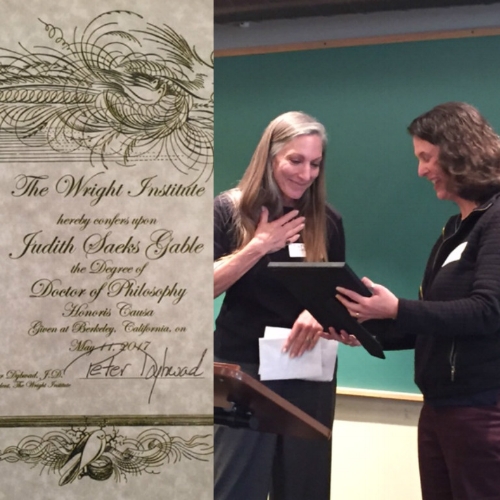
On May 11, 2017, the Wright Institute presented a prestigious award - an honorary Doctorate of Philosophy Degree – to Judith Gable, our longtime Acknowledge Alliance Collaborative Counseling Program Director. We’d like to congratulate Judith and recognize her for the life-changing work she continues to do every day.
For the past 22 years, Acknowledge Alliance and the Wright Institute have built a solid working partnership and internship program. 9-12 students from the Wright Institute Doctor of Psychology program are selected annually to join our team as counseling interns. They work on school sites and deliver direct counseling services to traumatized and underserved youth. We support our interns with regular clinical supervision and clinical training focused on the best practices for working with this specific population.
The intensive training of our Wright Institute doctoral interns is crucial. The students they serve show signs of depression, academic failure, and aggression as a result of the trauma they experience at a young age (along with other factors out of their control). The deeply rooted issues that they face are oftentimes related to their sense of hopelessness and anger at the adults who fail to meet their basic needs for consistent care, safety, and attachment. Through consistently providing students with meaningful and quality therapeutic relationships in a nonjudgmental safe space, they improve their school engagement; find compassion for themselves and each other; and experience renewed hope and a glimpse of a future with new possibilities.
Under Judith’s dedicated and outstanding leadership throughout our 22-year partnership, the Collaborative Counseling Program has overseen 186 Wright Institute interns – many of whom are successful and recognized psychologists today.
We sent a survey to our past interns and asked, “How did Acknowledge Alliance prepare you for where you are now?” Here are just a few of the glowing responses that speak volumes about the lasting impact of Judith’s guidance and our program:
“It was a great experience – my first in thinking dynamically about people's behavior. Judith was one of my favorite and best supervisors. I still think of her insightfulness and compassion (for clients, but also for me as a trainee).”
“The supervision that I received from Judith was stellar. She helped me think about complicated trauma and find ways to reach kids who others had decided were unreachable. I think often of my work at Acknowledge and it is always with gratitude and appreciation.”
“Judith has been an inspiration and a pivotal part of my work/training since the day I moved back to the Bay Area for grad school. From supporting me and helping me to develop patience as a beginning clinician, to providing further opportunities with Acknowledge Alliance, I, like so many others, owe so much to Judith, Beth and the rest of the family at Acknowledge Alliance.”
To gain more understanding about the unique ways we train our interns and work with traumatized youth, read Judith’s publication: “Unlikely Transformations: Kids in Prison and the Psychotherapy Interns We Train to Work with Them.”
In one of her passages, she wrote, “These kids need adults who can meet them where they are, honor their open wounds, and consistently shine a light on the beauty and innocence that lies beneath their protective armor.” Judith, thank you for living up to that example – you have truly inspired and shaped many lives throughout your decades of heart-centered work.

Forget-Me-Not: Fields of Hope
Event Highlights
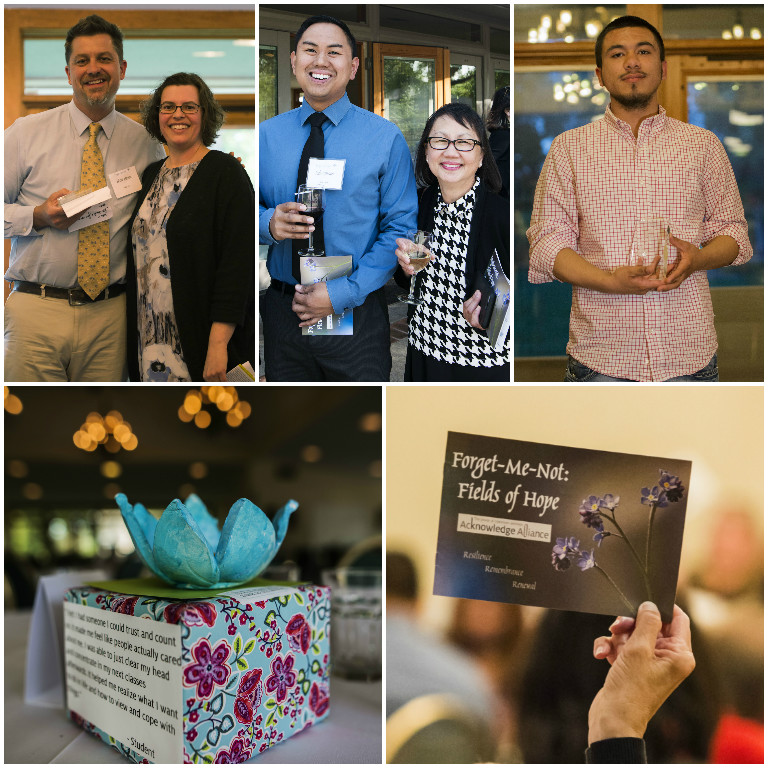
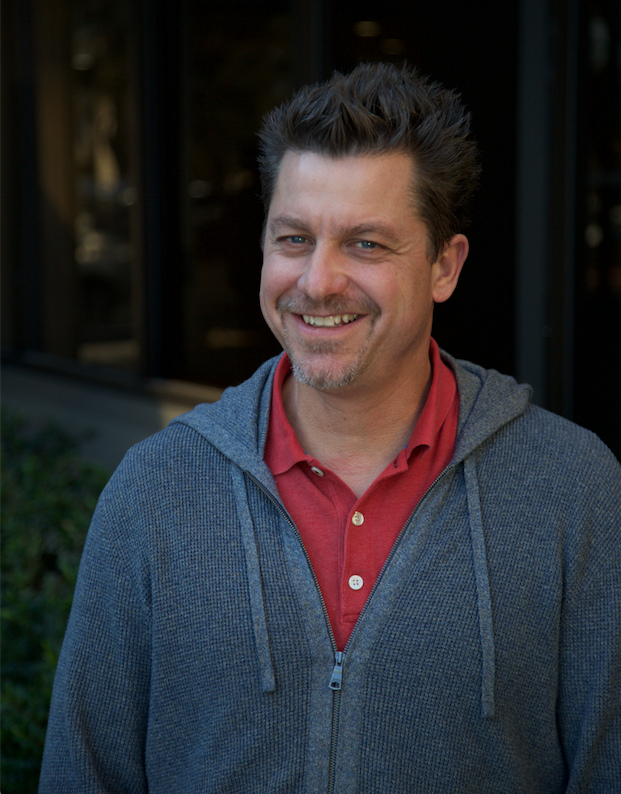
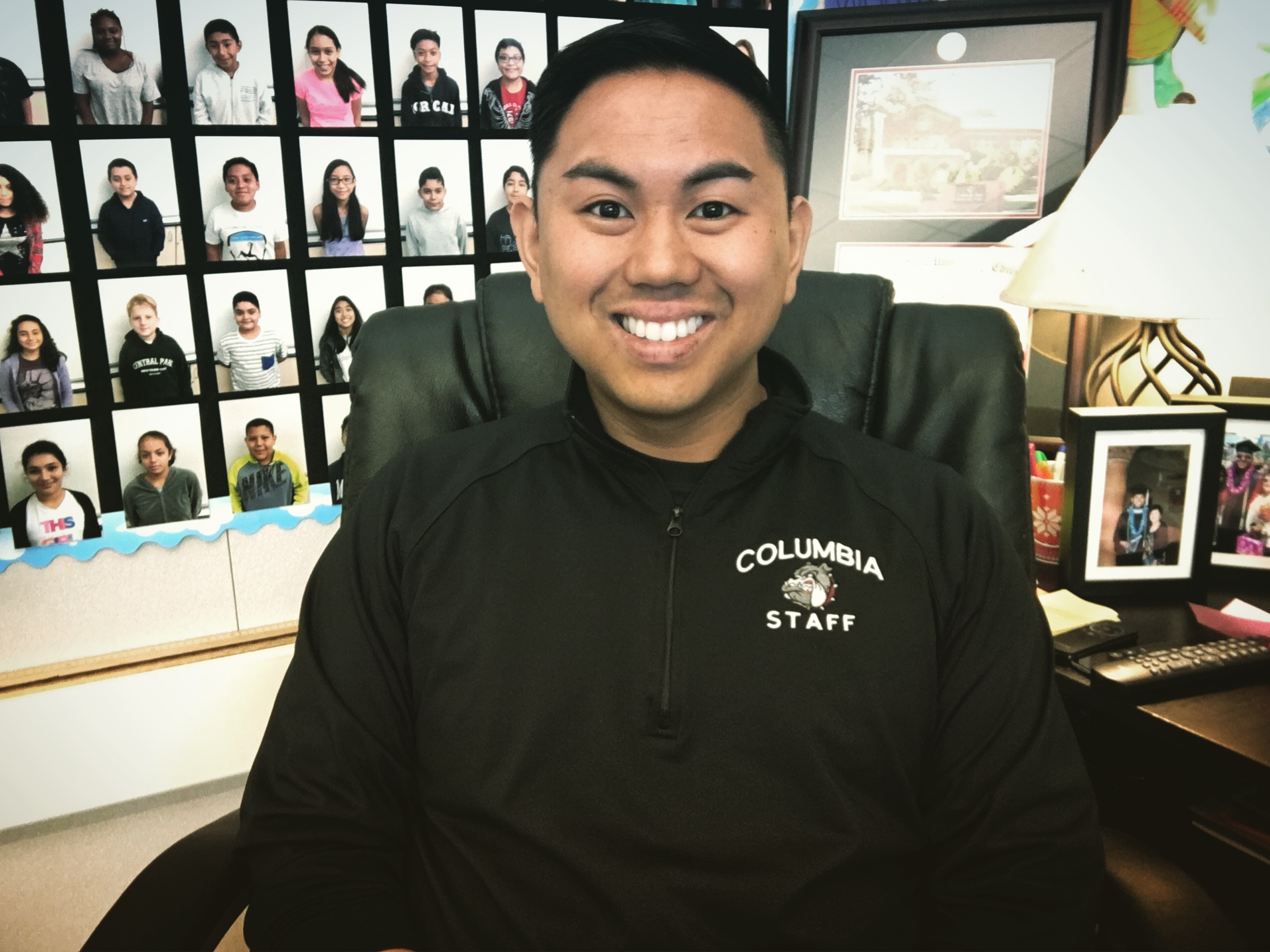
Honorees: Steve Hamm, Rob Felicano, Timoteo Anaya-Gracian
We can't help but smile when we remember all the acts of kindness, inspiring moments and heartwarming stories that were shared amongst us at our 10th Forget-Me-Not. This has been our best year yet. We had the highest attendance and reached a new milestone in our fundraising efforts. Thank you to everyone who took a part in this event - we appreciate your support, your generosity, and your life-changing impact.
Introducing Our Educator Honorees
| |||||||||||||||||||||||||||||||||||||||||||||||||||||||||||||||||||||||||||||||||||||||||||||||||||||||||||||||||||