
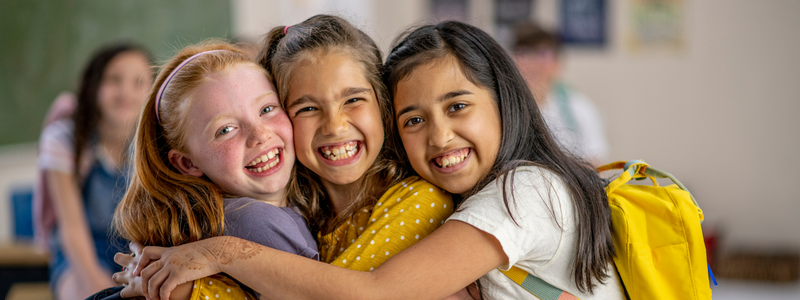
The start of a new school year brings new classrooms, new routines, and often, new people for students and educators. Whether it is a student meeting a new teacher, a teacher welcoming a new group of students, or colleagues getting to know one another, the first few weeks of school offer meaningful opportunities to build relationships that can shape the year ahead.
At Acknowledge Alliance, we know that relationships are at the heart of resilience and well-being. Research shows that when students feel connected to their school community and believe that adults and peers care about them, they have stronger academic, social, emotional, and health outcomes (CDC, 2024). The Centers for Disease Control and Prevention identifies school connectedness as a powerful protective factor that supports student well-being and success (2024).
Small, intentional moments can help create a sense of belonging and lay the foundation for trusting relationships that contribute to a thriving school community. As you settle into the new school year, try these four simple ways to build meaningful relationships:
1. Start with Curiosity
Building a relationship begins with getting to know the person beyond their role in the classroom. For educators, that might mean learning about a student's interests, strengths, and hopes for the year. For students, it can mean discovering that their teacher is genuinely interested in who they are. Asking questions, listening without judgment, and being curious about one another can help establish trust (Cohen, 2024).
2. Make Space for Connection
The beginning of the school year can feel busy, but relationships commonly develop when we make time for connection. A few minutes of conversation before class, a check-in during the day, or a shared laugh can make a meaningful impact. Connection does not always require a significant investment of time or effort; it can start with simply being present. Small moments like these can help students feel connected to school. According to the CDC, this feeling of connection makes students more likely to attend school regularly, achieve higher grades, and experience better overall wellbeing (2024).
3. Notice and Celebrate Strengths
A strengths-based approach is woven throughout Acknowledge Alliance's work because recognizing strengths can help people build confidence, strengthen relationships, and see new possibilities when challenges arise. Make an effort to notice and name the qualities you see in others, whether it is recognizing a student’s creativity, kindness, perseverance, humor, or teamwork.
Helping people recognize their own strengths can boost their sense of self while also showing that we value the unique qualities that make them who they are.
4. Remember that Relationships Take Time
Not every relationship will develop immediately. Building trust takes time, consistency, and patience. Some students may need several weeks before they feel comfortable opening up, and new educators and colleagues may also need time to find their place within a school community. Look for small ways to create connection now and throughout the school year. You can learn a new name, ask a question, listen closely, notice a strength and check in again. Simple actions like these can become the building blocks of relationships that help students and educators feel a greater sense of belonging and support throughout the year.
At Acknowledge Alliance, we believe resilience grows through relationships. As we begin another school year, we are grateful to partner with educators and school communities to create environments where meaningful relationships can grow. When students and educators feel known, valued, and connected, they are better equipped to navigate challenges and thrive together.
References:
Centers for Disease Control and Prevention. (2024). School Connectedness Helps Students Thrive. U.S. Department of Health and Human Services. Retrieved from https://www.cdc.gov/youth-behavior/school-connectedness/index.html
Centers for Disease Control and Prevention. (2024). Safe and Supportive School Environments. Retrieved from https://www.cdc.gov/healthy-youth/what-works-in-schools/safe-supportive-school-environments.html
Cohen, Geoffrey. (2024). How to Create More Belonging for Yourself and Others. Retrieved from https://greatergood.berkeley.edu/article/item/how_to_create_more_belonging_for_yourself_and_others