
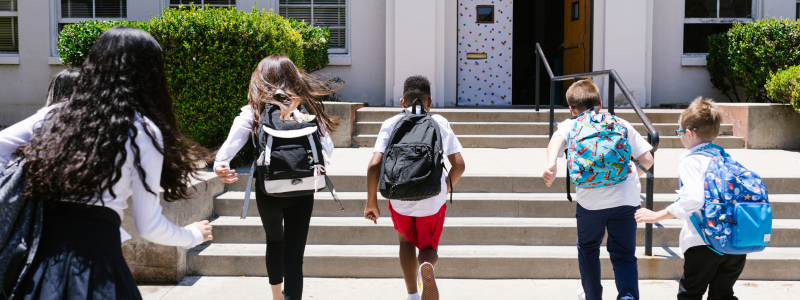
A new school year brings fresh opportunities, but it also brings change. As students settle into new classrooms, educators welcome new faces, and families adjust to new routines, it is natural to experience a combination of excitement, anticipation, and uncertainty.
Research from the American Psychological Association shows that resilience can be strengthened over time through practices such as building supportive relationships, developing healthy coping strategies, and adapting to challenges. Small actions like maintaining routines, staying connected, and practicing self-compassion can make a meaningful difference in strengthening our resilience.
Here are a few ways you can build resilience during the back-to-school season:
1. Prioritize connection.
Whether it's greeting students by name, checking in with a colleague, or setting aside time to talk with your child about their day, meaningful relationships create a strong foundation for resilience. As the CDC notes, "stable and supportive relationships give us the support we need to cope with stressful life challenges" (CDC, 2014).
2. Establish predictable routines.
Consistent schedules for mornings, meals, homework, and bedtime help reduce stress and provide a sense of stability during times of change. According to the CDC, "kids feel safe and secure because they know what to expect" (CDC, 2024).
3. Focus on small wins.
Celebrate progress, not perfection. Taking time to notice small accomplishments and moments of growth can build confidence, motivation, and a greater sense of well-being. Check out the Greater Good Science Center at UC Berkeley to learn more about the importance of practices that help people recognize positive experiences and cultivate skills that support resilience and thriving.
4. Make space for emotions.
Change can bring excitement, worry, or both. Acknowledging feelings without judgment helps children and adults feel seen and supported. Instead of immediately trying to solve a problem, take time to listen, ask open-ended questions, and remind others that their feelings are a normal part of navigating change.
5. Take care of yourself.
Educators and caregivers are often focused on supporting others. Remember to recharge by taking breaks, practicing self-compassion, and leaning on your own support network.
At Acknowledge Alliance, we know that resilient schools begin with resilient adults. Through our Resilience Consultation Program, licensed mental health professionals partner with educators and school leaders to provide ongoing consultation, coaching, and practical social-emotional learning strategies. By supporting educator well-being, we are helping create classrooms where students feel safe, connected, and ready to learn.
As the school year begins, remember that resilience is about taking things one step at a time, staying connected, and knowing that we do not have to navigate change alone.
References:
American Psychological Association. (n.d.). Resilience. APA Dictionary of Psychology. Retrieved July 9, 2026 from https://dictionary.apa.org/resilience
Centers for Disease Control and Prevention. (2024, May 14). Social Connection. U.S. Department of Health and Human Services. Retrieved from https://www.cdc.gov/social-connectedness/about/
Centers for Disease Control and Prevention. (2024, August 8). Tips for Building Structure. U.S. Department of Health and Human Services. Retrieved from https://www.cdc.gov/parenting-toddlers/structure-rules/structure.html
Greater Good Science Center. Greater Good in Action: Science-based Practices for a Meaningful Life. University of California, Berkeley. Retrieved from https://ggia.berkeley.edu/